Guide
How much does a standing desk cost, and what changes with price?
Published
Note: This page contains affiliate links. If you buy through them we may earn a commission at no extra cost to you. Learn more
In short
Standing desks span from simple manual and single-motor desks to heavy dual-motor frames with solid tops. As you move up the tiers you typically gain a second motor, three-stage legs with a wider height range, a higher load rating, memory presets and extras on the controller, a better top and a longer warranty. Prices change constantly, so compare by these features rather than by a fixed figure.
Products for this job
Compare all 7 productsMaidesite T2 Pro Plus frame: 62 to 125 cm, dual motor
Check price on AmazonAffiliate linkMaidesite 140 x 70 cm: 72 to 120 cm, 80 kg
Check price on AmazonAffiliate linkErGear 140 x 80 cm: 4 presets, USB-A port
Check price on AmazonAffiliate link
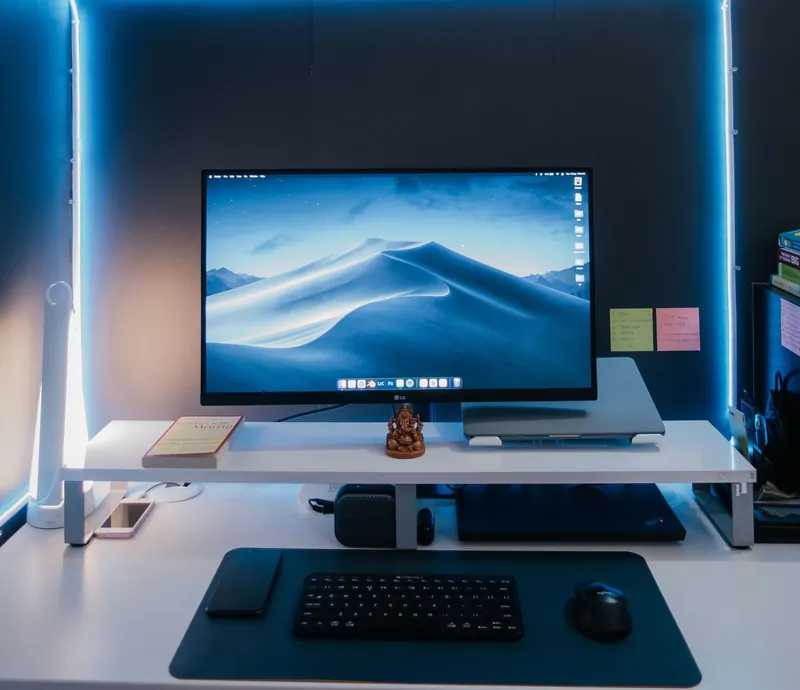
Standing desks vary enormously in price, and two desks that look alike in photos can be very different underneath. Rather than quote prices that change weekly, this explainer breaks down what you actually get as you move from entry level to the upper end: the motors, legs, height range, load rating, controller, top and warranty. It uses the desks and frames in our guides as examples, so you can see which features appear at each level and decide where spending more is worthwhile for you.
Entry level: simple lift
The cheapest sit-stand desks are manual (hand crank or pneumatic) or single-motor electric. A hand-crank frame like the manual frame in our guides needs no power but takes time to wind up and down. Pneumatic desks, such as the Leitz folding desk, rise quickly with gas assistance but carry little weight.
Single-motor electric desks drive both legs through a shaft. The Flexispot Basic frame is an example: a 71 to 122 cm range, 71 kg load and plain up and down buttons with no presets. Entry desks usually have two-stage legs, lighter frames and load ratings of roughly 60 to 80 kg.
Mid range: dual motors and presets
The middle of the market is where most people buy. Here you usually get dual motors, a load rating of around 80 to 125 kg, a controller with three or four memory presets and often a USB port, child lock and anti-collision. Maidesite's T2 Pro frame, with dual motors, 125 kg, four presets and a 10-year warranty, sits here, as do many complete desks from ErGear, Maidesite and Flexispot.
Mid-range complete desks often include a spliced or one-piece engineered wood top, hooks and cable management. Our standing desks under £400 guide covers this tier.
Upper tier: range, stability and warranty
Higher-end frames add three-stage legs for a wider height range, typically from around 60 cm to 125 cm, which suits shorter and taller users. They use more steel, so they are heavier and steadier at full height, and they accept larger tops. Controllers may add LED height displays, more presets, USB-C and reminders. Warranties get longer and more specific, with separate terms for frame, motors and electronics.
Premium complete desks may come with solid wood or high-pressure laminate tops, built-in cable trays and more finishes. L-shaped desks with three legs and two or three motors also sit near the top, because they need stronger frames.
| Feature | Entry | Mid | Upper |
|---|---|---|---|
| Lift | Manual or single motor | Dual motor | Dual motor, heavier frame |
| Legs | Two-stage | Two or three-stage | Three-stage |
| Typical range | Narrower | About 72 to 120 cm | About 60 to 125 cm |
| Load | About 60 to 80 kg | About 80 to 125 kg | Often 100 kg and up |
| Controller | Up and down | 3 to 4 presets, USB | Display, presets, extras |
| Warranty | Shorter | Several years | Longest, split by part |
Where spending more is worth it
Spend more for a dual motor if you have two monitors, a PC on the desk or a large top. Spend more for three-stage legs if you are well below or above average height, or plan to use a walking pad. Spend more on warranty if you want the desk to last a decade. You can save by buying a frame and fitting your own top, or by choosing a desk converter if you only want to try standing.
- Light laptop setup, average height: entry or mid-range is enough
- Multiple monitors or PC: dual motor
- Very tall or short: three-stage legs
- Corner workspace: L-shaped frame with dual motors
- Trying it out: converter
Hidden costs to plan for
A frame-only purchase needs a top, screws and possibly a cable tray. Monitor arms help on standing desks because the screen rises with the desk but still needs fine-tuning. An anti-fatigue mat and a footrest are common additions. Delivery can be heavy: frames often weigh 20 to 30 kg, so check whether two-person delivery is offered. Our single vs dual motor article goes deeper into the motor choice.
Frequently asked questions
Why are standing desks so expensive? Motors, control electronics, telescopic steel legs and testing all add cost compared with a fixed desk.
Is a cheap standing desk worth it? For a light setup and average height, yes. Check the load rating and height range carefully.
Is it cheaper to buy a frame and top separately? Often, and it lets you choose the top. Allow for the top's weight in the load rating.
Are converters cheaper than desks? Usually, and they keep your existing desk, but they carry less weight.
What you need
- Check price on AmazonAffiliate link
Maidesite T2 Pro Plus frame: 62 to 125 cm, dual motor
- Check price on AmazonAffiliate link
Flexispot 3-stage frame: 60 to 125 cm, dual motor
- Check price on AmazonAffiliate link
Maidesite T2 Pro Plus: 3-stage, 62 to 125 cm